
Chasing Shadows: Fascination with Romanticized Pain
To live is to suffer, to survive is to find some meaning in the suffering.

First and foremost, I owe you an explanation. The familiar hum of regular posts here has been conspicuously absent, and for that, I apologize. The reason behind this silence is twofold. Over the past months, I've embarked on an exhilarating journey of authoring a book, a venture that demanded my utmost attention and energy. While this blog has always been a sanctuary for my thoughts, the call of this new endeavor and the demands of life momentarily shifted my focus. I'm grateful for your patience and understanding, and I'm eager to share my experiences and the fruits of this hiatus with all of you.
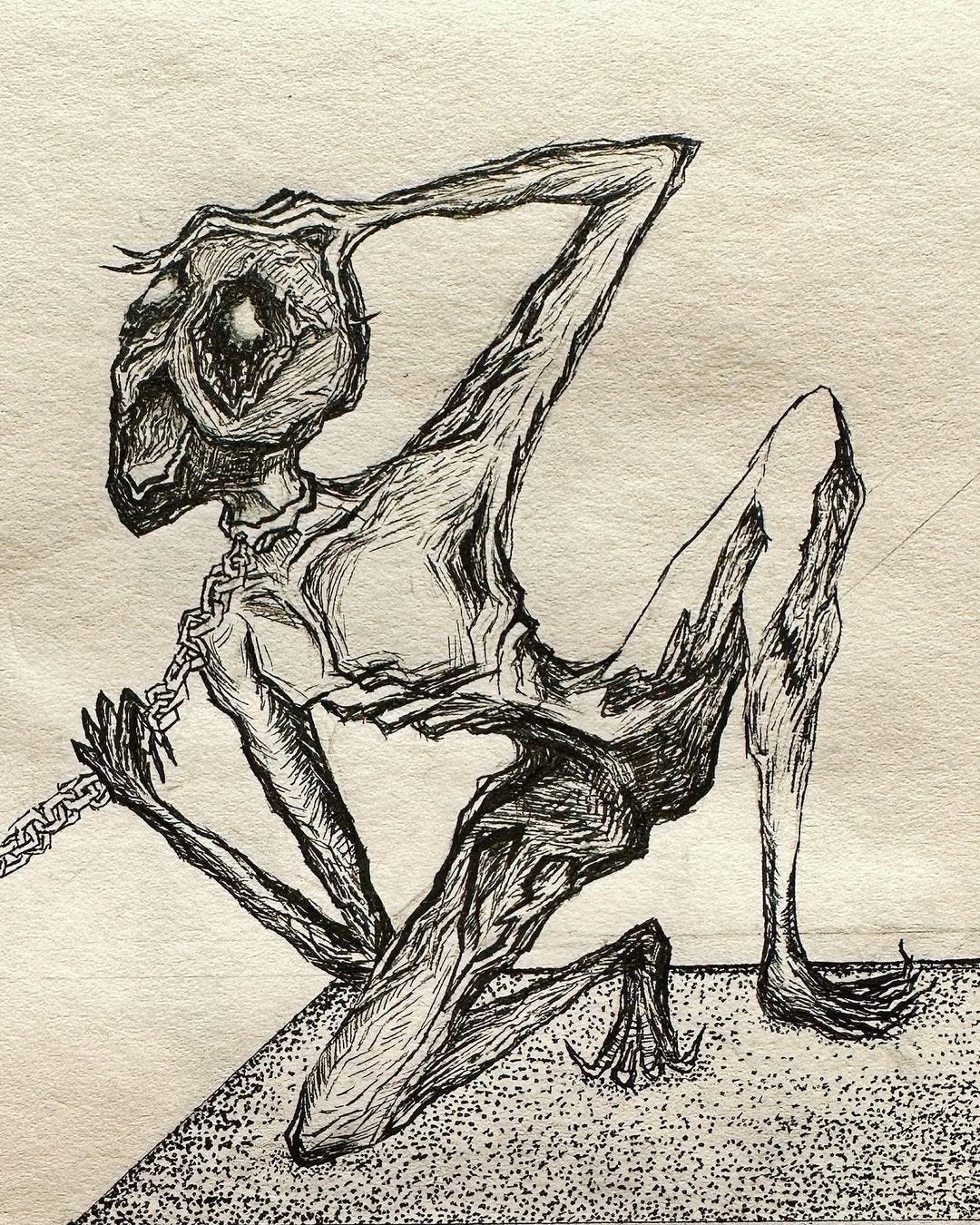
During my early teenage years, from 11 to 14, I grappled with the all-too-familiar adolescent insecurities. Every acne breakout felt like a glaring spotlight, and the fear of judgment from the popular kids was a constant shadow. My parents, with their protective instincts, set boundaries that felt more like barriers: no sleepovers, no smartphone, and trips to the mall only under watchful eyes. This, coupled with our often strained relationship, left me feeling like they just didn't get me. To find some solace, I turned to journaling, documenting my feelings for three years after getting inspiration from Anne Frank.
Reflecting on those entries, they portray a young soul crying out for understanding. While I did face genuine moments of sadness and struggled with self-worth, I wasn't as desolate as my words might suggest. Here's where things get a bit murky: my immersion in Orkut during the early 2010s skewed my perspective. Orkut, a platform akin to a blog-style Twitter, seemed to suggest that showcasing sadness made one more intriguing. It unintentionally glamorized mental health challenges, making users, including me, who knew nothing of mental health, feel that expressing pain was a ticket to attention and empathy. But this raises a poignant question: what happens when we begin to chase after sadness, not out of genuine emotion, but for the allure of the attention it might grant us?
At the age of 14, nestled in bed with my trusty Micromax Bolt, I'd lose myself to the powerful strains of “Numb” by Linkin Park. In the theater of my mind, I'd envision heart-wrenching scenes where I was torn away from those I loved, their expressions of sheer despair playing out vividly. Crafting these poignant daydreams, with me at the center, became a cherished escape. Curiously, these were private reveries, known to no one but me. Without an audience to witness or acknowledge them, one might wonder: What drew me to indulge in such fantasies?

In "On the Genealogy of Morality," Nietzsche delves deep into the human psyche, suggesting that we derive a certain pleasure from exercising pain upon others, not out of moral obligation, but simply for the sake of afflicting pain. According to Nietzsche, we weren't born with an innate moral compass. The act of punishing or inflicting pain on someone, labeling them as ‘good’ or ‘bad’, isn't a natural human instinct. It's a sophisticated concept, demanding an understanding of causality, intention, and the nature of those intentions.
Nietzsche didn't think our cavemen ancestors were big-brained enough for such complex moral judgments. Instead, he traced the origins of punishment to a more primal human interaction: the contract. In this primitive understanding, every harm had its equivalent. If you harmed me, you owed a debt, which could be settled by me inflicting equal harm upon you. Instead of monetary or material compensation, satisfaction was derived from the act of causing pain to another.
The annals of history are filled with chilling accounts of torture, as Nietzsche graphically details. From stoning to boiling culprits alive, to the gruesome act of dismembering them using horses, the list is harrowing. What's even more unsettling is that these acts of extreme cruelty were often showcased as entertainment during grand events like royal weddings. It's a stark reminder of the darker facets of human nature. Yet, as societies evolved and became more civilized, there arose a need to curb these brutal instincts to foster a harmonious coexistence.
What if you approach a girl and say, “Hey, you’re really cute. I was thinking... there's this new live show where they boil people alive in oil. I heard it's hilarious! We should check it out! It sounds like a fun time!”. You probably get the stare into your soul unless for some reason they’re really into it.
Nietzsche delves deep into the origins of our moral compass, tracing the evolution of guilt and conscience. As societies progressed, our once openly expressed cruel instincts were deemed immoral, leading to collective shame. Unable to express these instincts outwardly, they found a new outlet in popular culture. The thrill of horror movies or the adrenaline of violent sports became ways for society to vicariously experience cruelty, albeit from a safe distance.
Yet, this redirection wasn't enough. These suppressed instincts turned inwards, giving birth to what Nietzsche terms as "bad conscience." It's that nagging voice that chides us when we act against our moral code. This "internalizing of man", as Nietzsche put it, led to a unique form of self-infliction. The pleasure once derived from outward cruelty was now found in personal suffering, manifesting in acts of self-denial and sacrifice.
Nietzsche's exploration doesn't stop there. He delves into the origins of our moral dichotomies: 'good' vs. 'bad' and 'good' vs. 'evil'. The aristocratic elite, who prided themselves on bravery, wealth, and strength, labeled these traits as 'good'. This wasn't a moral stance but a declaration of their superiority. In contrast, 'bad' was everything the commoners represented, lacking the 'good' traits of the aristocracy.
This aristocratic morality sowed seeds of resentment among the masses, leading to a shift. The common people, in their quest for identity and dignity, redefined morality. They introduced a new dichotomy: 'good' vs. 'evil'. Here, 'evil' encapsulated all the traits the aristocrats had once labeled 'good' – wealth, power, and ambition. 'Good', in this new moral order, was everything 'evil' was not. This perspective is echoed in many religious teachings, where virtues lie in humility, sacrifice, and the rejection of worldly desires.
We see it in popular culture too where people prefer to be the victim because that's who the masses will side with, not the powerful. So in Nietzsche’s eyes, we purposely subject ourselves to pain, and then call it "being as a good person." Are we stupid? Well, if suffering and sadness is an inevitable part of life, then to make ourselves suffer gives us a sense of control over our pain. We have self-mastery over our existence this way. And we attach moral value to feeling shameful, feeling guilty, and depriving ourselves of pleasure, because then at least suffering and feeling bad about ourselves makes us a good person, and we aren't hurting for nothing.
It’s as if we created a new term like "purposeful suffering" or "good damage." When pain and suffering are imbued with meaning, they become bearable, even empowering. Damage with meaning is acceptable. It can even make us feel special, like we are stronger than those who haven't endured hardships. But damage as plain damage? Now that's what really hurts.

It's intriguing how the human psyche often gravitates towards the allure of the unknown, the misunderstood, and the mysterious. Reflecting on my preteen years, it's evident that platforms like Orkut played a significant role in shaping my perceptions about mental health. While I may not have been at the extreme end of the mental health spectrum, the platform's romanticization of sadness nudged you towards embracing it. It's a poignant reminder of how external influences can amplify internal struggles.
I think my observation about the value of negative emotions is astute if I do say so myself. Sadness, in its genuine form, can be a catalyst for growth, introspection, and even creativity. However, the danger lies in glamorizing and chasing it as a badge of depth or authenticity.
The historical romanticization of tuberculosis is a fascinating parallel. The "faded flower" aesthetic, where frailty and artistic brilliance intertwined, became an aspirational ideal for many young girls. But with the demystification of the disease through medical advancements, its allure waned. The tragic beauty once associated with it was replaced by a stark understanding of its physical repercussions and slowly people stopped romanticizing it.
Today, mental illnesses occupy a similar space in popular culture. The enigmatic nature of the mind, combined with society's limited understanding of mental health, has made it a fertile ground for romanticization. But, as with tuberculosis, as our understanding deepens and the mysteries unravel, the allure might fade. One can only hope that as we gain more insight into the intricacies of the mind, society will approach mental health with empathy and understanding, rather than idealistic notions.
References
Nietzsche, F. (2013). On the genealogy of morals (R. C. Holub, Ed.; M. A. Scarpitti, Trans.)
I’m also adding a small section at the end to let y’all what I’ve been upto last month.
August recap


